
铁石心肠
亚马逊扩大货运业务规模再租10架飞机 总量达50架_我的网站

A |

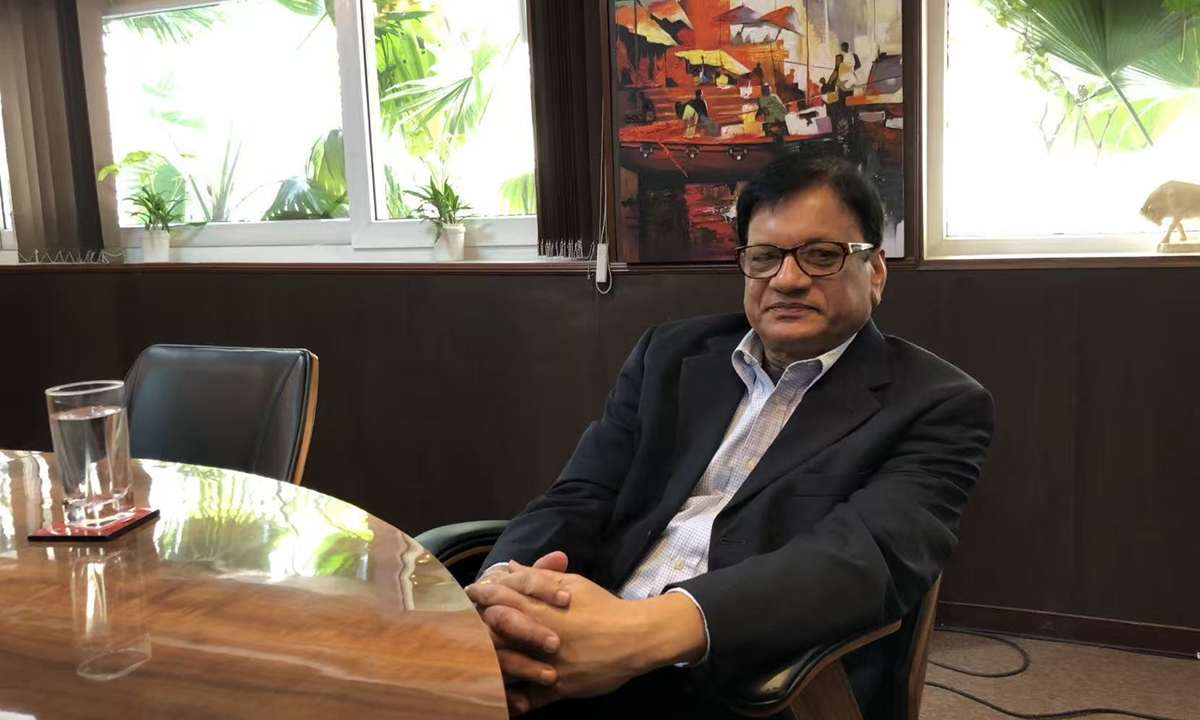
China and India have considerable scope for cooperation in the field of artificial intelligence (AI), as their AI capabilities are complementary in many respects, a senior Indian investor told the Global Times in an exclusive interview.
There is considerable scope for AI cooperation in areas that address common global challenges, including healthcare, education, agriculture, climate resilience, industrial productivity and scientific research, always within the policy frameworks established by the respective governments and international perspectives on responsible and secure AI, Mahendra Swarup, founder of VG Capital and former president of the Indian Venture and Alternate Capital Association, told the Global Times on Wednesday.
AI is likely to become one of the defining technologies of this century. India's strengths lie in software development, engineering talent, digital public infrastructure and entrepreneurial innovation. China has developed significant capabilities in AI applications, hardware, manufacturing and large-scale deployment. "These capabilities are complementary in many respects," Swarup said.
The veteran on the front line of India's venture capital investment sector made the remarks amid improving bilateral ties and a certain level of liberalization of Chinese investments in India.
Chinese investors have historically contributed to the growth of several successful Indian companies, especially start-ups. While investment activity has been moderated by regulatory developments over the past few years, there has always been underlying interest in the Indian market because of its long-term fundamentals, Swarup said.
"If the recent improvement in bilateral relations leads to greater regulatory clarity and business confidence, the Chinese investors will once again evaluate opportunities in India, although the general sentiment is one of cautious optimism," said Swarup.
Amid positive momentum in bilateral relations, Swarup noted rising opportunities for entrepreneurs from the two countries to engage in practical cooperation.
There are several areas where entrepreneurs from India and China could potentially complement each other's strengths, subject to the regulatory frameworks of different sectors in both countries, the investor said, highlighting areas including healthcare technologies, clean energy, electric mobility, advanced manufacturing, climate technologies, industrial automation, logistics and supply-chain innovation.
"In whichever sector the complementary strengths of both China and India can be brought together responsibly, they can create value not only for both countries but also for global markets," said Swarup.
India has recently shown signs of easing some long-standing restrictions on trade and investment with China, with Chinese experts saying that the move reflects the country's growing recognition of China's importance to its economic development, and a desire to create a more favorable environment for improving bilateral ties.
There has been a gradual policy adjustment, including easing restrictions on foreign direct investment (FDI) in e-commerce, allowing FDI from companies with Chinese ownership, The Hindu reported on August 1.
With India set to host a BRICS summit this year, Swarup also said that Indian and Chinese companies can work together to promote the interests of developing countries.
India and China are both major economies with significant experience in addressing the challenges of development at scale. Although each country has followed its own development path, there are areas where companies from both nations can contribute meaningfully to broader development across Asia, Africa and other emerging markets, Swarup noted.
There is considerable potential for collaboration in affordable healthcare, digital financial inclusion, renewable energy, agricultural technologies, education technology, infrastructure, supply-chain development and support for small and medium-sized enterprises. These are areas where scalable and affordable solutions can have a significant impact on improving livelihoods, the veteran said.
Partnerships that combine technology, entrepreneurship and long-term investment can help create solutions that are both commercially sustainable and socially impactful. "As two of the largest economies in the Global South, India and China have the opportunity to contribute positively to sustainable development through innovation, responsible investment and constructive commercial engagement," Swarup said.
。 亚马逊将从现有合作伙伴美国航空运输服务集团(ATSG)租赁这10架飞机。此前,亚马逊已在2016年从ATSG租赁了20架波音767货运飞机。

B | 今年11月,亚马逊接收了第40架波音767货运飞机,使得正在使用的货运飞机已达40家。

C | 这10架新飞机将在未来两年加入亚马逊机队。

D | 届时,亚马逊的机队规模将增至50架。亚马逊还将于2019年在沃思堡机场开设一个新的地区航空枢纽,然后在2021年在辛辛那提/北肯塔基国际机场再开设一个航空枢纽。之前有报道称,ATSG将在未来三年收购20架从美国航空公司退役的二手波音767。

E | 这种客机可以改装为货运飞机,而且亚马逊很可能是主要客户。不过,ATSG在消息传出时拒绝点出亚马逊就是其客户。就在几天前,联邦快递淡化了亚马逊的威胁。

F | 联邦快递CEO史密斯对投资者表示:“目前,我们并未把他们视为同业竞争对手。
Current article:http://xgfiky2.wengsengzhanhuangu.cyou/142b8j9/20260826/576731.htm
Published on:06:54:30
我的网站最近更新
- Xbox与宜家携手推出全新YXSTABY系列,为游戏空间注入活力
- 追梦致敬威斯布鲁克退役:他避免了保罗式的困境
- 传闻小卡或将遭处罚 部分有意球队因此望而却步
- 宁德时代20家电池工厂实现零碳
- 《GTA6》裸体小镇泄露 前员工称不如“热咖啡”危机
- 오피스텔도 생애 첫 취득세 감면…1주택 재산세 특례 2029년까지
- 以文旅之笔描绘乡村振兴新画卷
- Chinese team develops intelligent vision sensor that turns light signals into AI-ready tokens, reducing use of energy
- 中俄联合声明:遵循睦邻友好、尊重国家主权的原则共同开发黑瞎子岛
- 直面“梅花”!节后上班第一天,上海局部地区将现暴雨并伴雷电_台风梅花来袭!江浙沪将迎强降水_受台风“梅花”影响 上海已降雨
- PM to inaugurate Kisan Samman Sammelan on Monday
- 台北市长蒋万安会见日本前首相麻生太郎,外交部回应
- Ring 0级固件威胁:新型UEFI rootkit恶意软件BlackLotus曝光
- 一家六口挤在不足30平米出租屋里,妻子打赏男主播27万,丈夫:这笔钱我们要挣好久,但是刷礼物一天就没了;律师解读:丈夫有权起诉追回
- 体验有新意 消费添活力|药香悠长,品出新“潮”味
- 几只风筝吓到以色列?以国防部长:加沙飞过来的风筝是战争行为,放飞人员将被直接打击
- Cloudflare 称 AI 智能体已占 60% 互联网流量,同比激增 1700%
- 辽宁省首个辽金历史文物展开展
- 厦门市企事业单位就业见习专场对接会举办
- 三星推出了一项针对手机的集中换屏服务:仅以较低的成本更换屏幕的主要组件
- 风来袭,请注意!
- "粥饼伦"首个店铺闭店:房租贵到受不了!房东也想分钱?
- 广东:规范汛期市场价格行为 不得捏造散布涨价信息
- South China’s Zhuhai airport cargo port tops 15,000 tons in first year
我的网站热门资讯
- 微信也可以拨打110:成都市公安微信报警平台正式上线
- 外媒锐评GTA6泄露:纯数字版也没拦住啊
- 前TVB女主播成日本人妻后晒美照 小背心热裤大秀美腿
- Kareena Kapoor Khan and Prithviraj Sukumaran Wrap The Shoot of Daayra
- 苹果掌控智能手表利润 Apple Watch Ultra将扩大领先优势
- 福建“十五五”商务发展规划出台
- 新机:华为10000mAh电池新机曝光;荣耀影像技术发布会官宣;三星Galaxy Z Fold8卖 1.29万元;HMD复刻Windows Phone磁贴UI
- Over 2,000 fabric suppliers gather at Zhejiang home textiles expo
- 《坠落2》沉浸式放映会 观众在架高的木板上观看
- 福州汤边社区儿童友好经验获全国推广
- 国王执行延伸条款 摆脱奢侈税压力可底薪补阵容
- 太空的第一座矿山,会挖什么,太空的第一座矿山,会挖什么
- 《State of Decay 3》:封闭测试将于今年向更多玩家开放
- 著名的英国数学家阿泰亚去世后声称证明了黎曼猜想。
- 消息称用于第十代iPad的键盘盖和Apple Pencil适配器配件将推迟数周发货
- 沧海桑田!15/16赛季蓝狐81分夺英超,纽卡37分仍降级维拉垫底
- World's first corporate FTZ offshore bond issued in Shanghai
- Long lines at gas pump unlikely, but Middle East crisis could disrupt oil supplies
- 福建实施脑机接口科技产业发展行动
- 售25.35万起/全新里程碑 小米YU7上市18小时锁单突破240000台
- 财政部安排农业救灾资金14.16亿元 支持各地病虫害防控
- 台风“简拉维”减弱为热带低压,或于今天白天在福建近海减弱消散,浙江、福建、广东、江西、湖南、湖北、海南、台湾等有大到暴雨
- Man rescued after saving dog in Fuzhou floods
- Qatar Airways CEO will step down after nearly 3 decades leading carrier